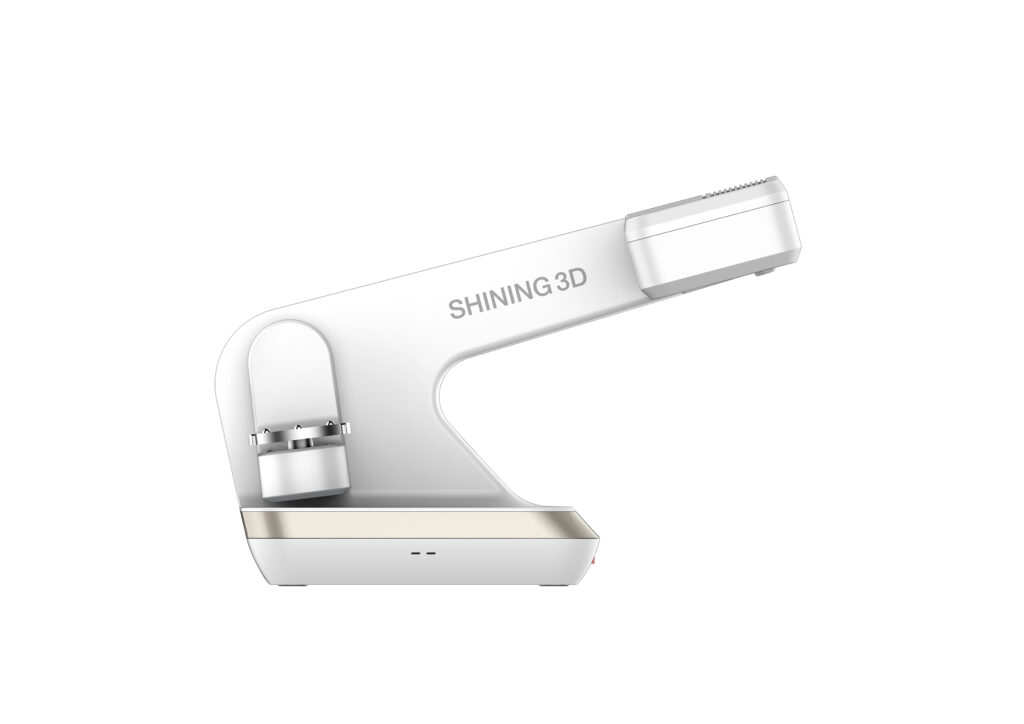
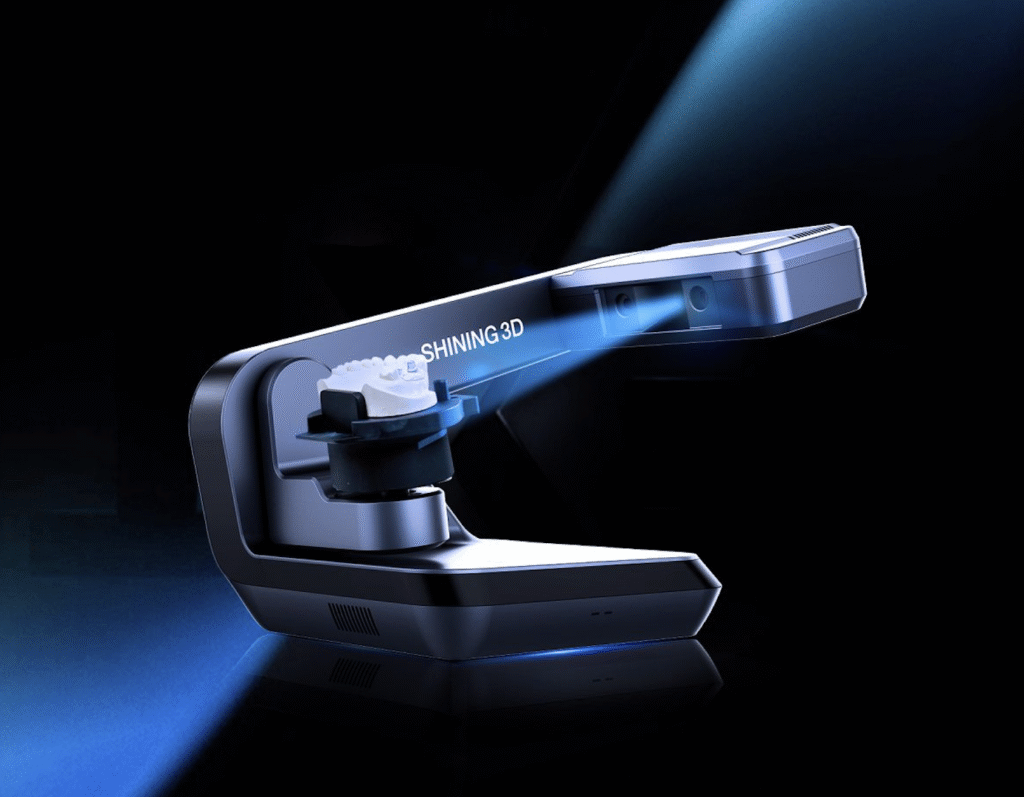
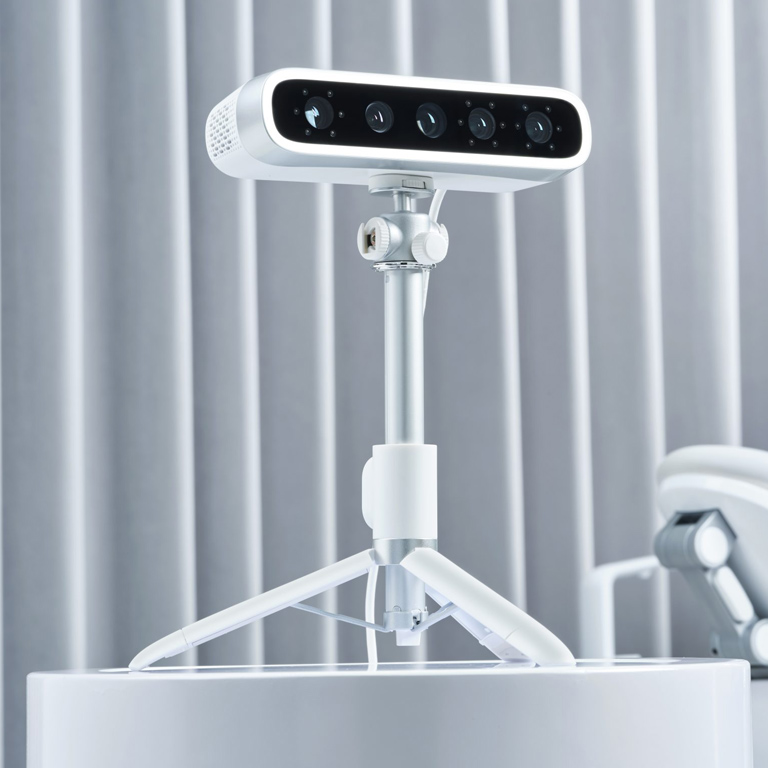
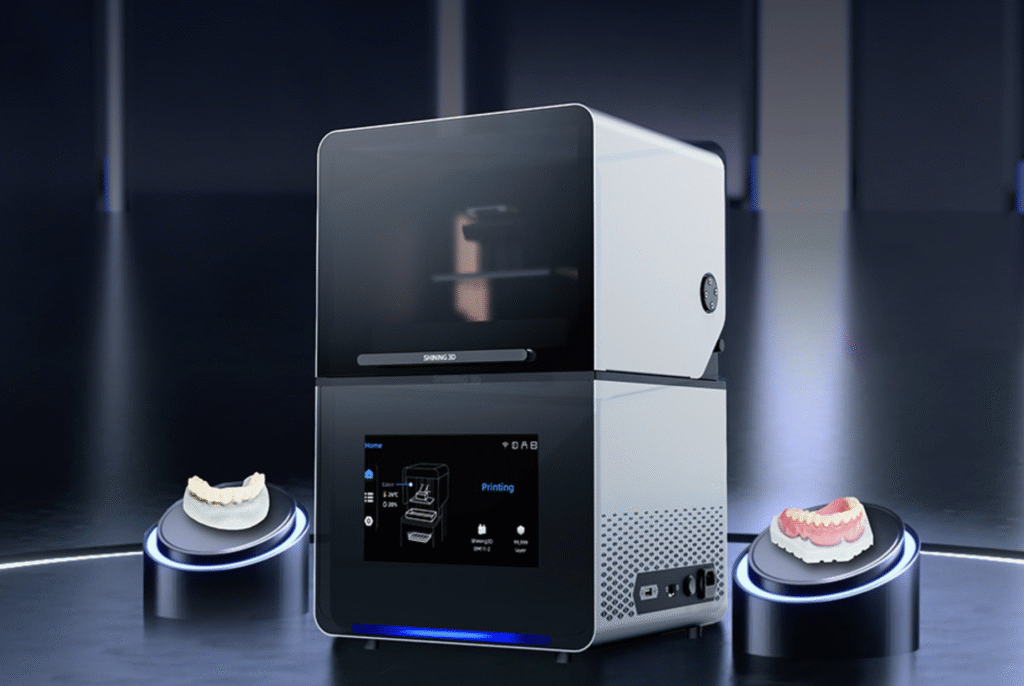
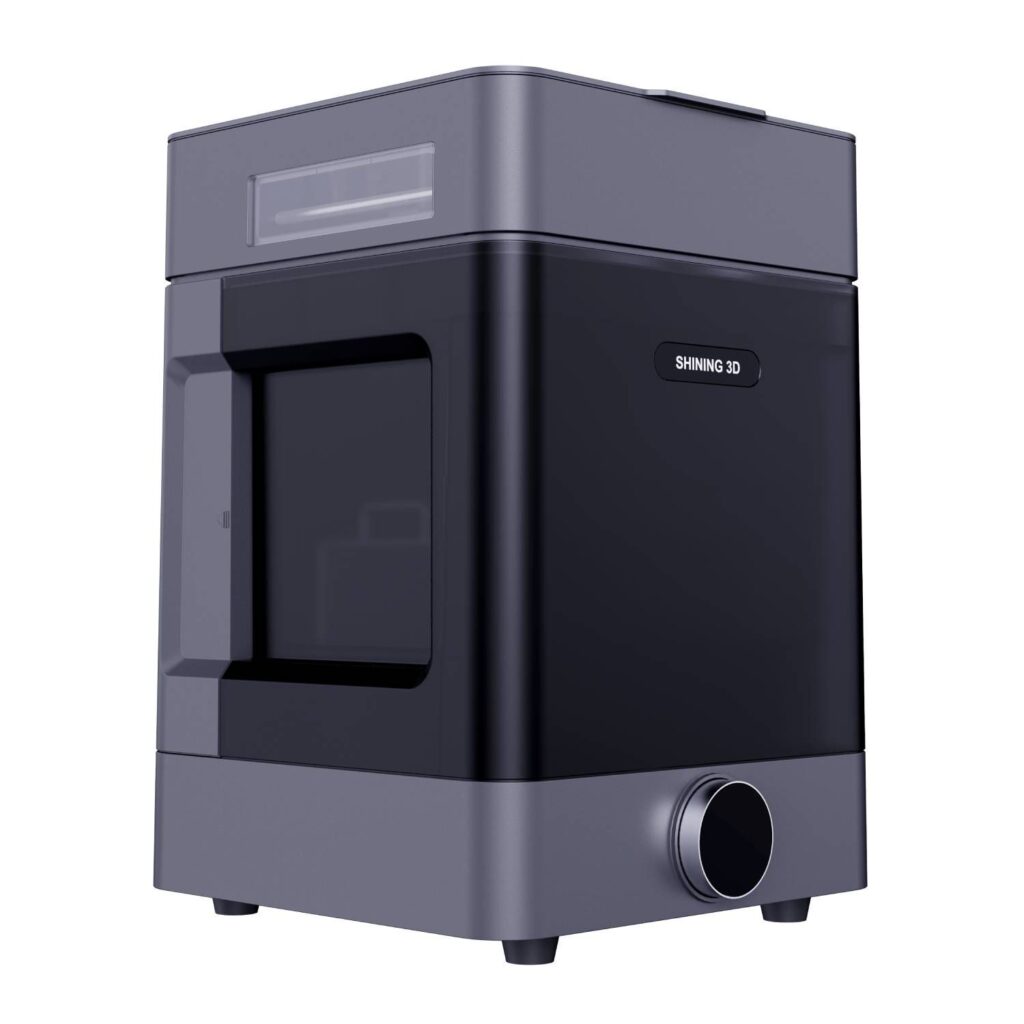
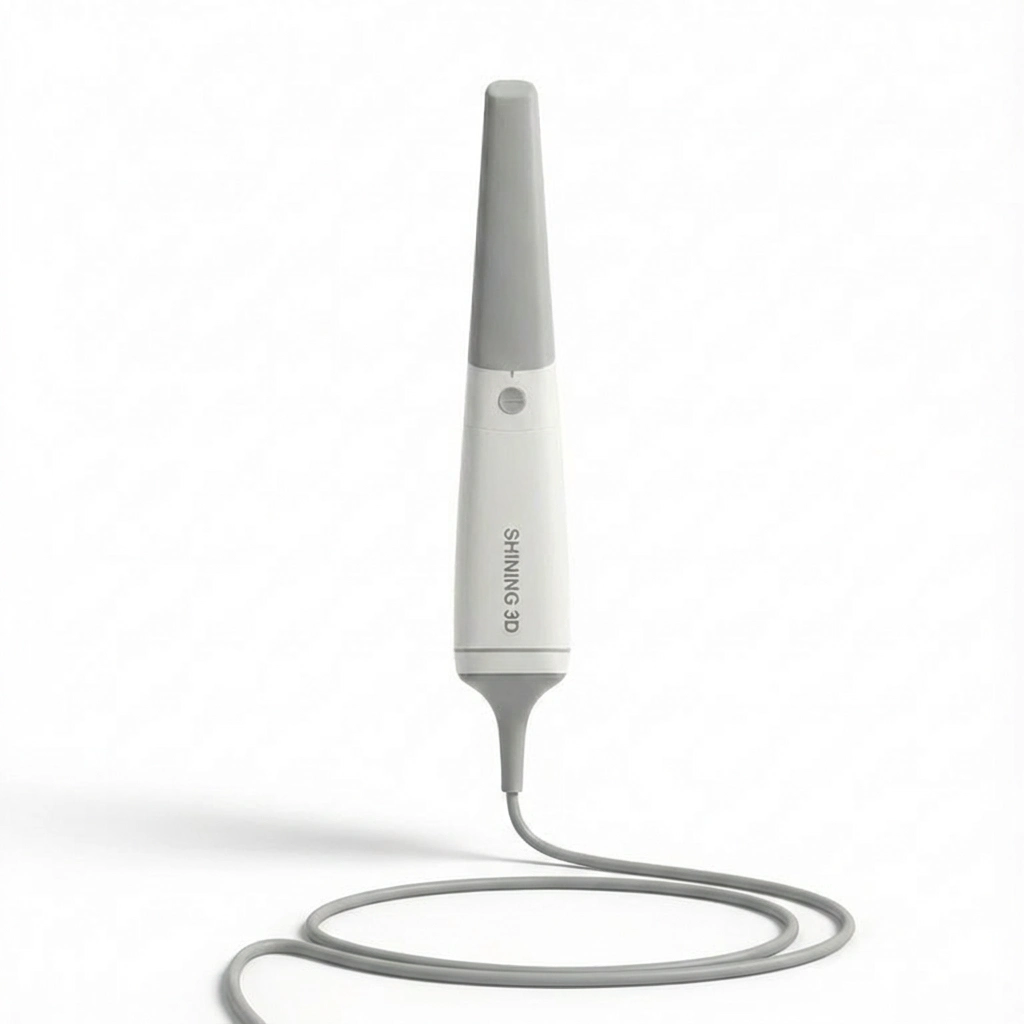
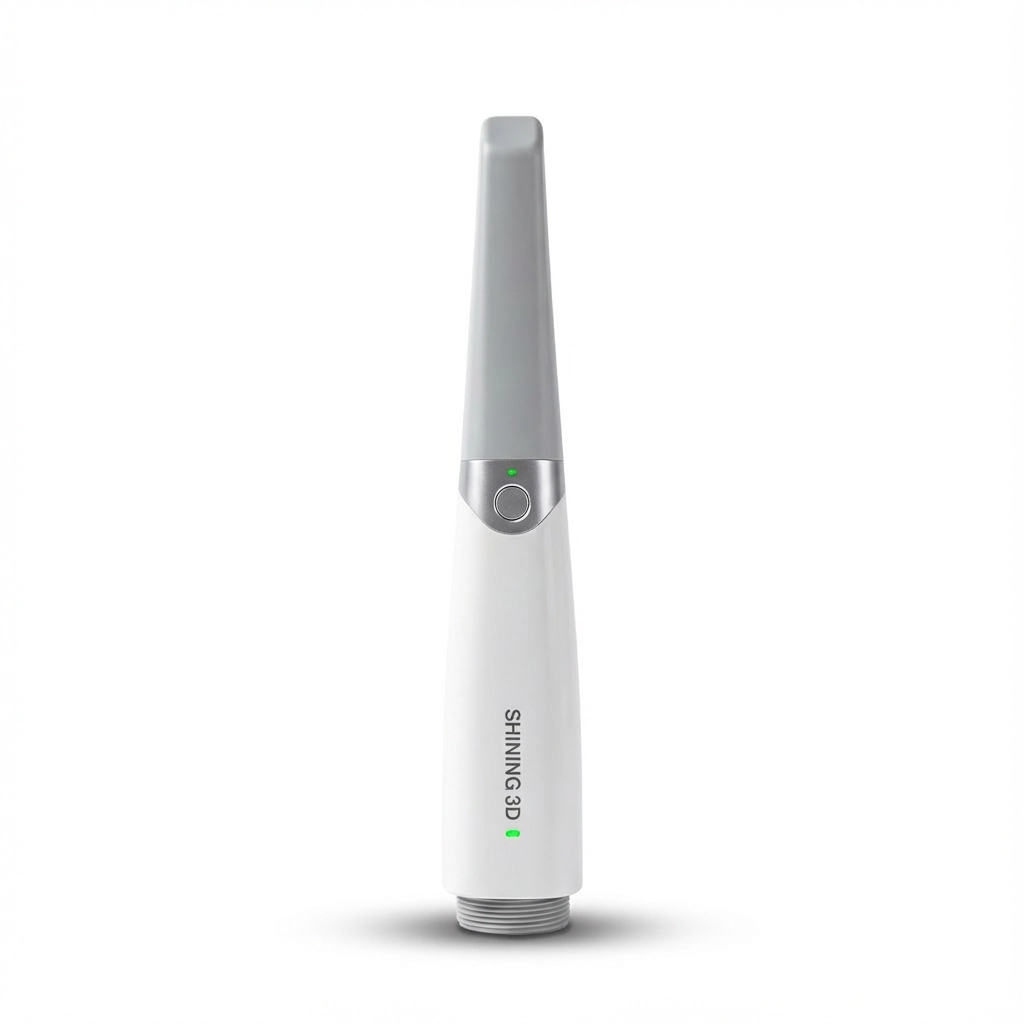
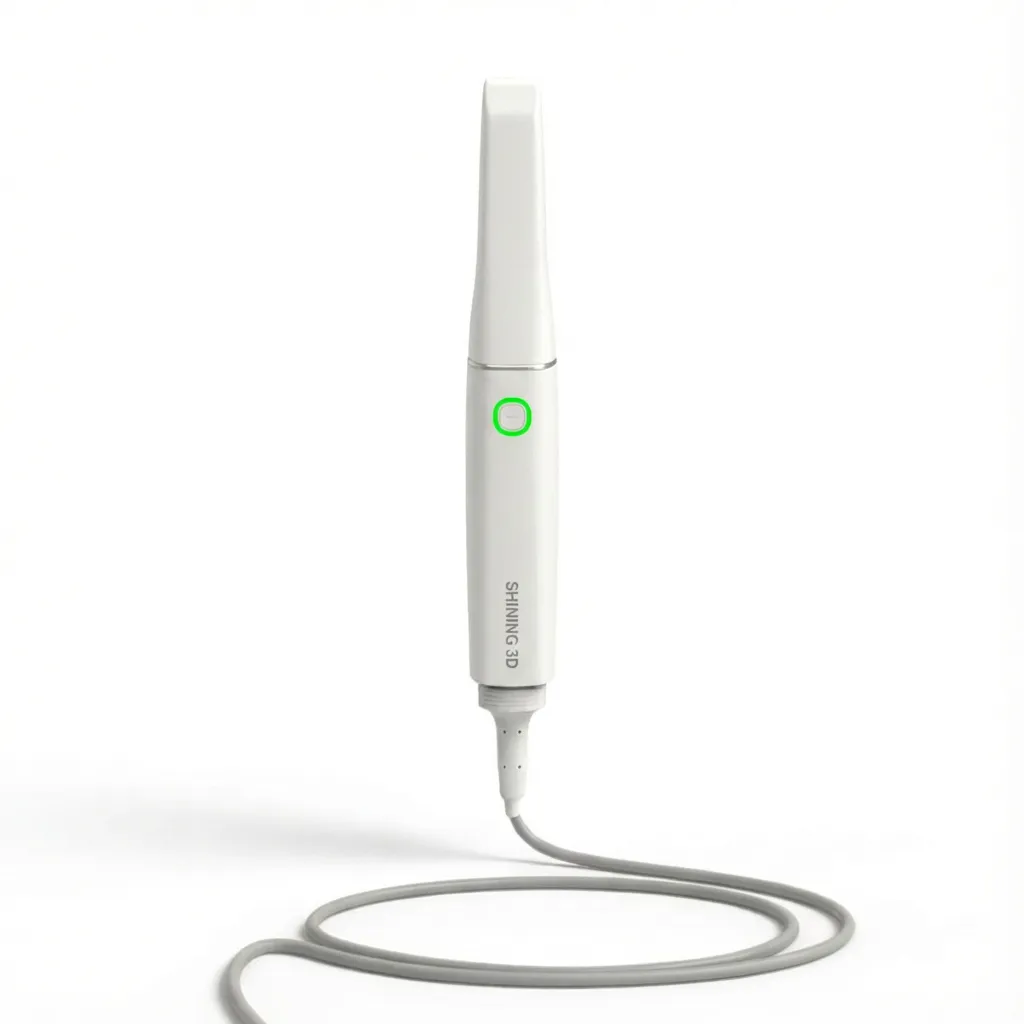
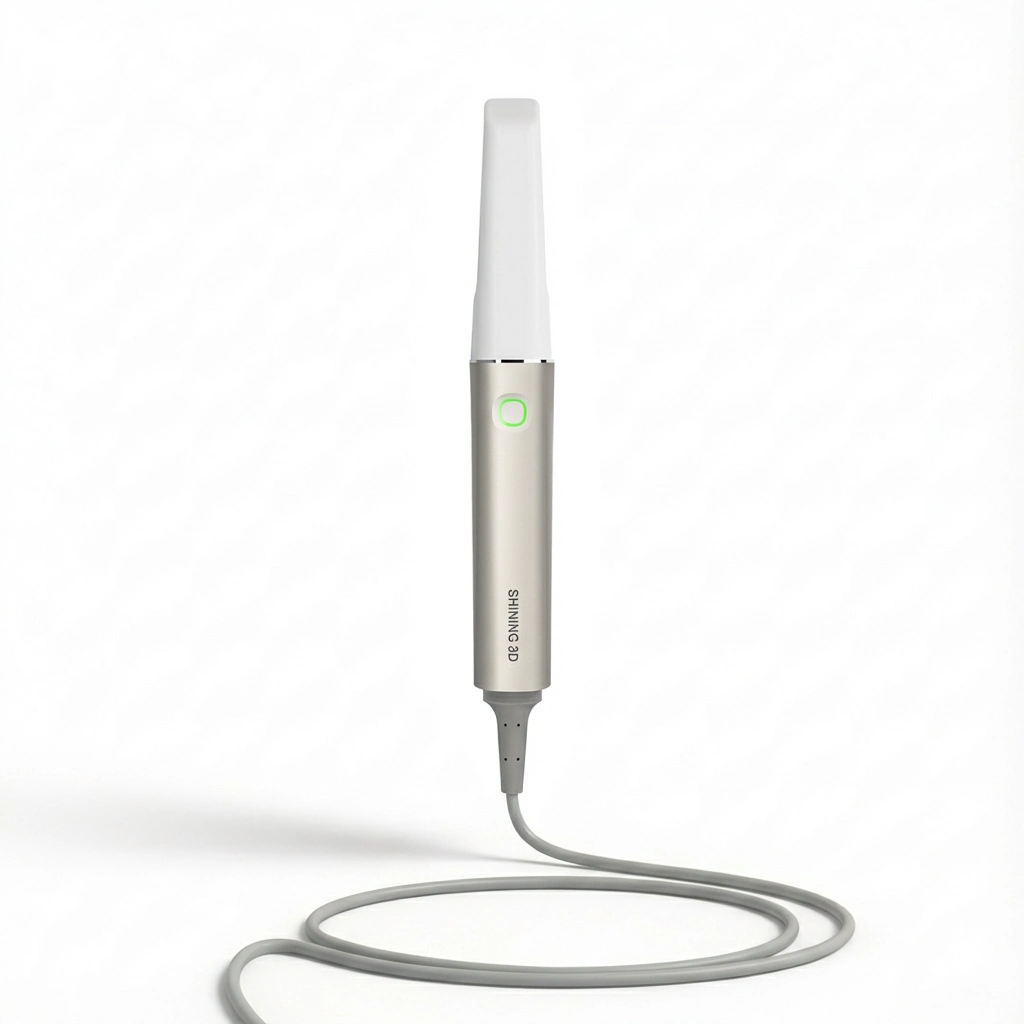
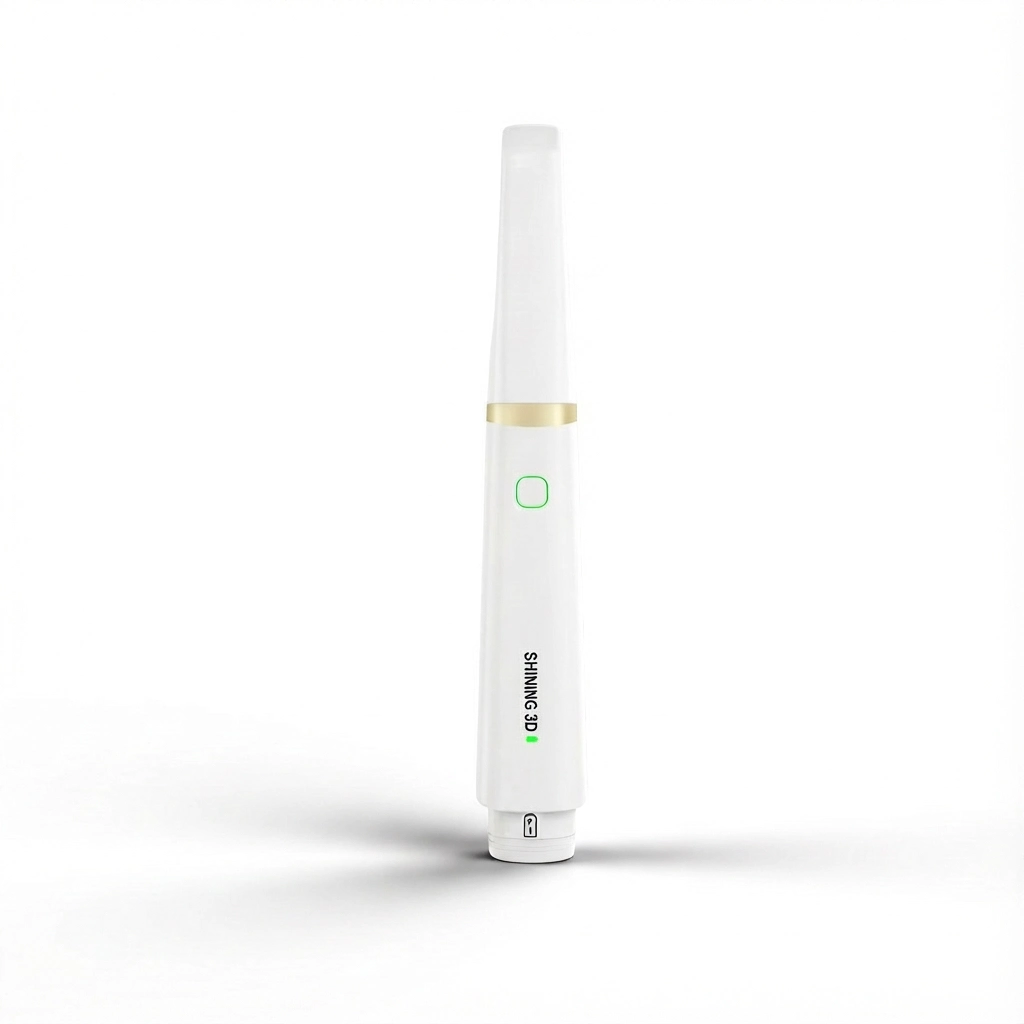
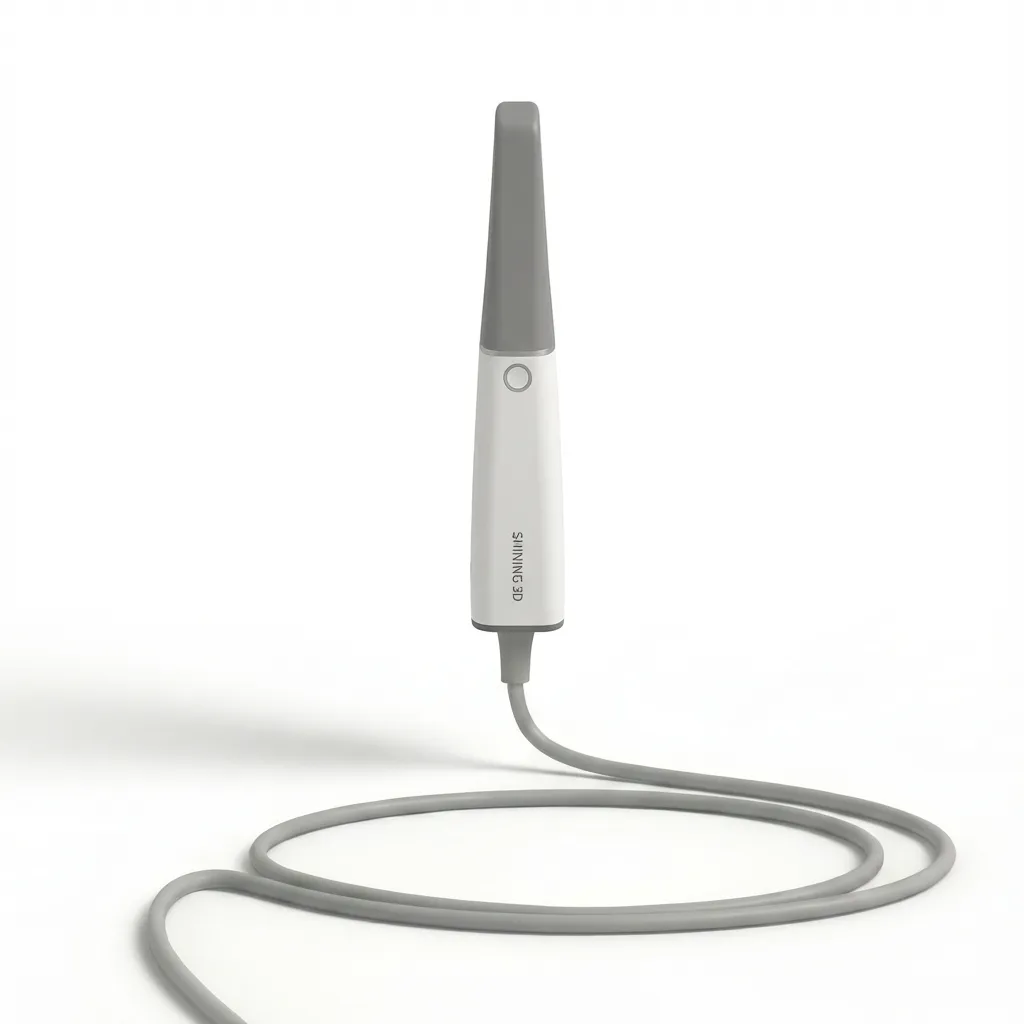

Shining 3D has become one of the most trusted names in digital dentistry, offering tools that help clinics and laboratories work with greater clarity and confidence. With years of experience in 3D imaging and manufacturing technologies, the company has built a reputation for producing equipment that delivers steady accuracy, consistent results, and practical workflow support. Dentists and technicians choose Shining 3D not because of grand claims, but because the products perform reliably in daily clinical situations whether capturing detailed scans for implants, creating models for prosthetics, or improving communication between clinic and lab. This combination of dependable hardware, well-designed software, and ongoing product development has made Shining 3D and its major product categories like Intraoral Scanners a solid choice for professionals who want to bring digital methods into their routine without unnecessary complexity.
Summary of our review about Shinning 3D is in this podcast:
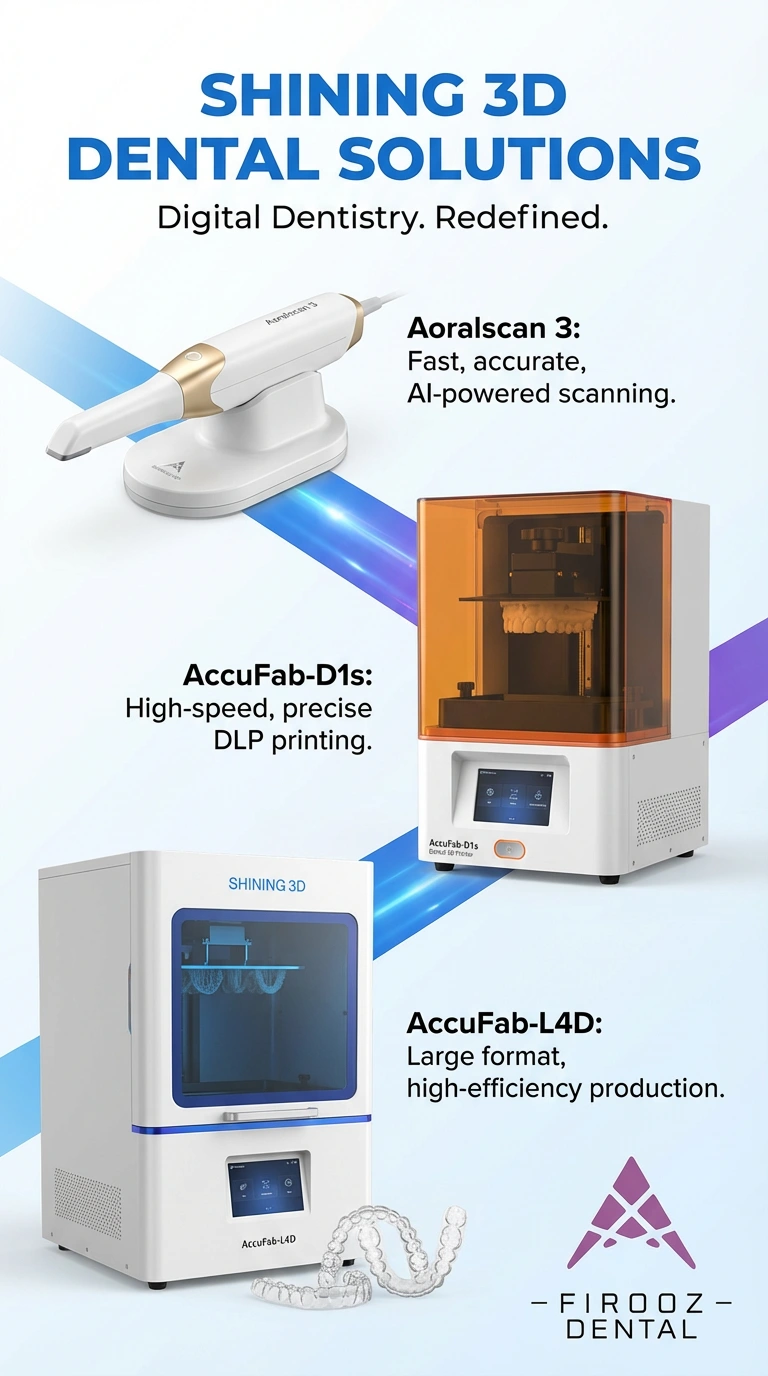
The Aoralscan line from Shining 3D is designed for clinics and laboratories that want dependable digital impressions without a steep learning curve. Each model in this family follows the same core idea: provide clear scans, stable performance during daily use, and a workflow that fits naturally into common dental procedures. The scanners rely on optical capture methods that register tooth surfaces, soft tissue, and bite alignment with steady accuracy. The Aoralscan units are known for their user-friendly interface, straightforward operation, and the ability to handle a wide range of restorative, implant, and orthodontic tasks.
Clinicians who have worked with these scanners often appreciate that the software guides them through each step and helps reduce retakes caused by missing areas or blurred regions. Laboratories also value the clean mesh output, which is suitable for crown and bridge work, implant planning, and appliance production.
| Model | Ideal Use Cases | Scan Performance | Handling & Ergonomics | Special Capabilities | Best For |
| Aoralscan 3 | General dentistry, crowns, bridges, quadrant and full-arch scans | Steady accuracy for routine procedures | Comfortable grip, suitable for long sessions | Standard optical capture, guided software workflow | Clinics wanting a reliable everyday scanner |
| Aoralscan 3 Wireless | Busy clinics, operators needing more movement around the chair | Similar performance to the wired model | Cord-free design, better mobility in tight spaces | Wireless operation, rechargeable battery system | Practices seeking easier movement and less cable management |
| Aoralscan Elite | Implant dentistry, full-arch cases, advanced restorative work | Higher consistency in difficult areas and long-span scans | Balanced weight, stable tracking during larger scans | Enhanced detail capture, improved frame alignment | Clinics focused on implant and complex restorative treatments |
| Aoralscan Elite with IPG | All-on-X, multi-implant procedures, full-arch prosthetics | High positional accuracy for implant scan bodies | Same handling as Elite but with added implant measurement capability | Intraoral photogrammetry for precise implant coordinates | Implant-driven practices and advanced dental laboratories |
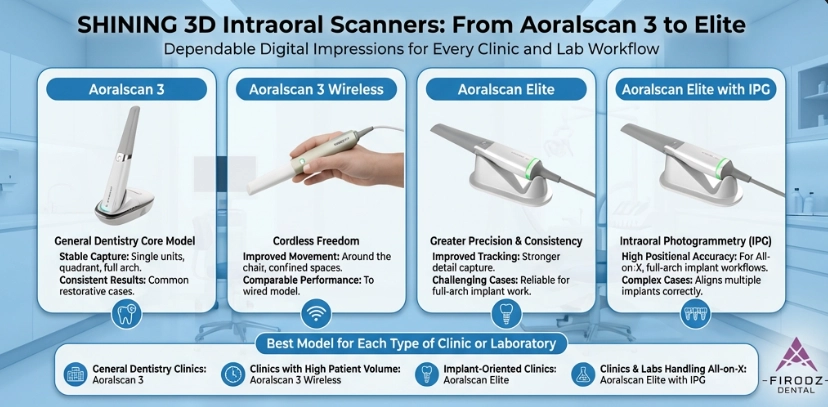
Although the Aoralscan units share the same philosophy, the models differ in speed, handling, and the type of clinical situations they support:
Choosing the right model depends on the clinical routine:
During the scan, the device captures a series of optical frames that represent the tooth surfaces from different angles. The software merges these frames into a continuous 3D model while the clinician moves the scanner along the arch. This live reconstruction allows the user to see missing areas immediately and rescan them without starting over. The method also reduces chair time, since the operator can confirm coverage before completing the scan.
In the models equipped with IPG, the scanner records the position of implant scan bodies using a method based on angular and spatial relationships. Instead of measuring only surface texture, the system calculates implant coordinates with stable positional accuracy. This is especially important for full-arch implant treatments where minor misalignment can affect the fit of the final prosthesis. IPG is often preferred by surgeons and prosthodontists who require reliable multi-implant measurements rather than basic surface scans.
The software uses pattern recognition to distinguish between teeth, soft tissue, and unwanted artifacts like cheeks or gloves. This makes the scanning process smoother and reduces the need for repeated passes. It also helps the software maintain tracking even when the scanner moves across shiny surfaces or areas with limited contrast. The result is fewer interruptions and a cleaner mesh that requires less manual adjustment before designing the restoration.
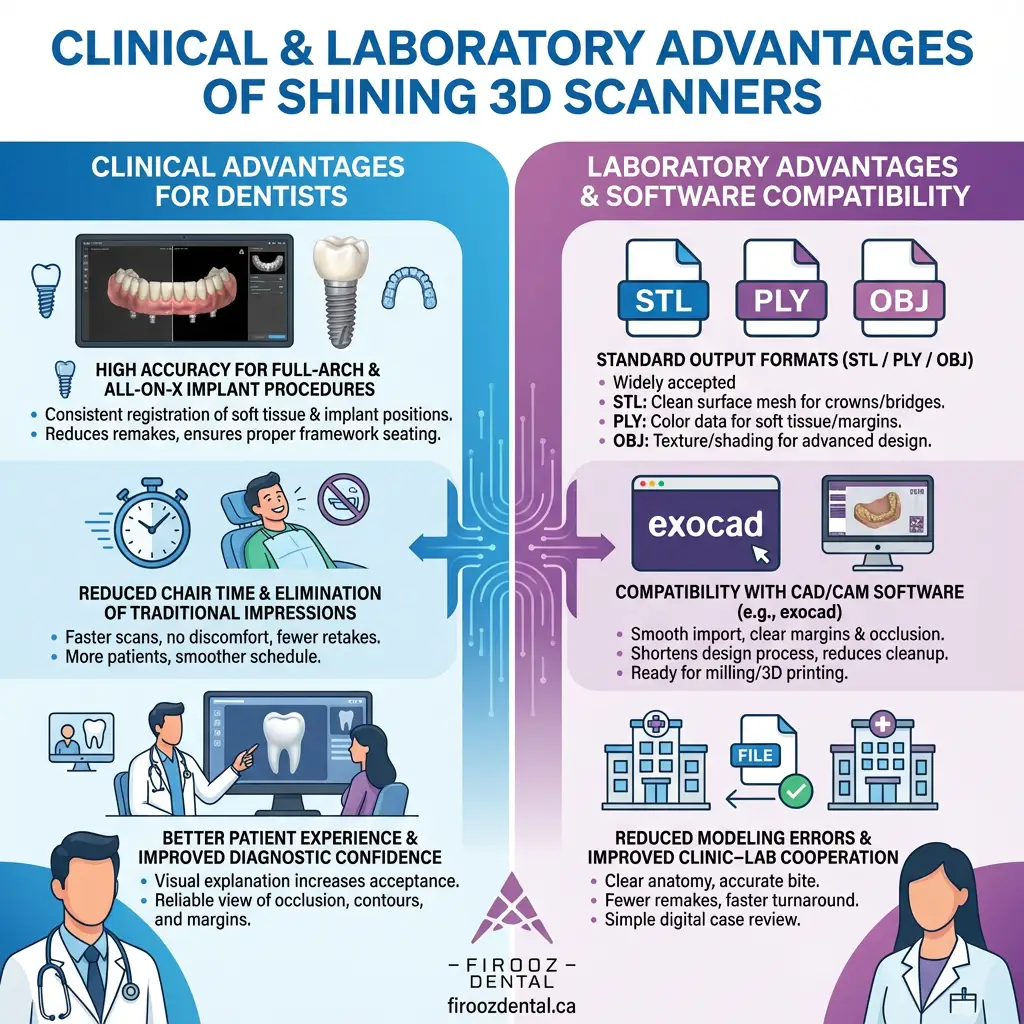
Full-arch implant scans demand consistent registration of soft tissue and implant positions. Many clinicians report that Aoralscan Elite and the IPG version perform well during these procedures and reduce the number of remakes. In All-on-X treatments, stable digital records help the laboratory design frameworks that seat properly without repeated adjustments.
Digital scans remove the discomfort of impression trays and materials. Patients appreciate this change, and dentists benefit from smoother appointments. A full-arch scan can often be completed in a short timeframe, and minor areas can be rescanned instantly. This helps clinics treat more patients with less interruption, particularly in busy schedules.
A clear digital model helps clinicians explain treatment plans to patients. Visual guidance improves communication and increases acceptance of recommended procedures. The scans also give the dentist a reliable view of occlusion, tissue contours, and preparation margins, which supports better treatment decisions.
Shining 3D scanners provide files in STL, PLY, and OBJ formats, which are widely accepted in dental laboratories. STL offers a clean surface mesh suitable for crowns, bridges, and fixed restorations. PLY adds color data that helps technicians identify soft tissue and margins more clearly. OBJ is useful when the lab needs texture or shading for advanced design. This flexibility ensures that laboratories can work with the files using their preferred design environment without needing converters or extra steps.
Most dental labs rely on CAD/CAM systems like exocad for everyday design tasks. Shining 3D scanners produce mesh files that import smoothly into these platforms. Margin lines, occlusion records, and prep surfaces remain clear after import, which shortens the design process and reduces model cleanup. The consistent mesh structure also allows milling centers and 3D-printing workflows to start quickly without issues caused by broken triangles or holes in the file.
A clean and detailed scan allows technicians to design restorations with fewer adjustments. Clear tooth anatomy, accurate bite registration, and complete soft tissue data help avoid inaccuracies that often appear when traditional impressions distort. As a result, the communication between clinics and laboratories improves: fewer remakes, fewer corrections, and faster turnaround times. Digital files also make it simple for both sides to review the case together and decide on margin placement, preparation correction, or occlusion adjustments.
| Format | Color Data | Typical Use in Dentistry | Notes |
| STL | No | Crowns, bridges, implant frameworks | Most common in CAD workflows |
| PLY | Yes | Soft tissue analysis, margin detection | Helpful for cases with subtle gingival contours |
| OBJ | Yes | Advanced design, visualization, patient communication | Supports texture and shading |
The software that comes with Shining 3D scanners supports the clinician throughout the scanning process. The Margin Line tool helps define finish lines with clarity, especially in subgingival areas. Bite Alignment ensures both arches are merged correctly, allowing the dentist to confirm occlusion before sending the file to the lab. The Clinic Toolkit includes tools for checking undercuts, adjusting preparation angles, measuring gaps, and identifying incomplete areas that may require a quick rescan. These tools help prevent errors before the file leaves the clinic.
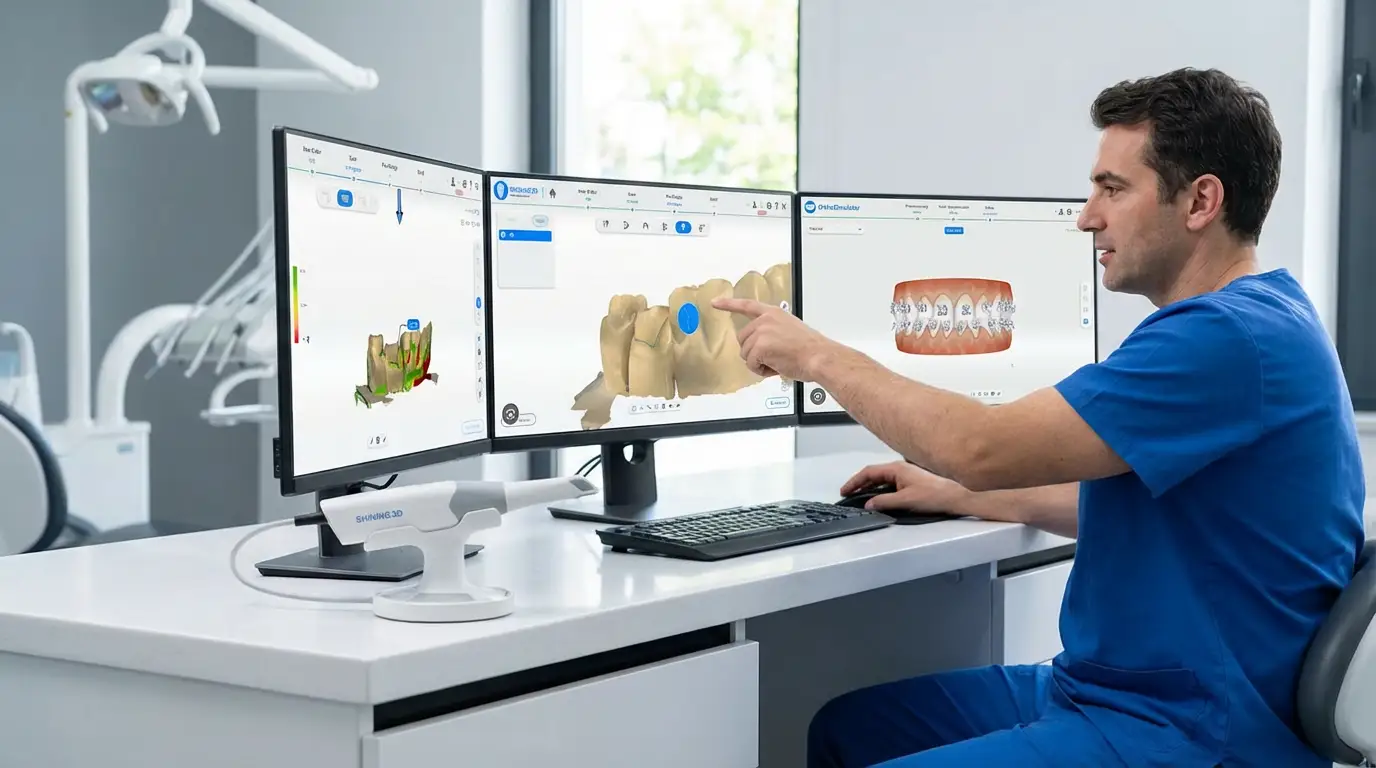
Clinics often need a simple way to send files to labs without delays or size limitations. Shining 3D’s software provides cloud storage and transfer features that allow users to share cases securely with their laboratory partners. The lab receives the file immediately, can review it online, and download it into its CAD platform. This reduces back-and-forth communication and avoids issues caused by email attachments or messaging apps that compress files.
The 2025 release strengthens overall system stability and improves scan tracking in reflective areas. Bite detection has been refined to better handle deep occlusal surfaces, and margin tools now display clearer visual boundaries. Several quality-of-life improvements have been added, such as quicker switching between tools and more responsive model rotation. These updates support smoother daily use in both clinics and laboratories.
| Feature | Shining 3D | Medit | 3Shape | iTero |
| File Formats | STL / PLY / OBJ | STL / PLY | STL / PLY | Mostly closed formats |
| Implant Support | Strong (Elite & IPG models) | Moderate | Strong | Limited for advanced implant work |
| Orthodontic Focus | General use | Some tools | High | Very high (aligner systems) |
| Cost Level | Moderate | Moderate | High | High |
| Platform Type | Open | Open | Semi-open | Mostly closed |
| Lab Integration | Easy | Easy | Very strong | Restricted to linked partners |

Medit scanners are known for their fast frame rate and active online community. However, Shining 3D typically offers a wider range of models, including options suited for implant-focused clinics. In many cases, Shining 3D files require less manual cleanup before entering CAD systems. Medit may be preferred for clinics wanting frequent software add-ons, while Shining 3D fits practices seeking consistent accuracy and hardware stability.
3Shape scanners often provide high-tier software features and are widely used in premium clinics. Their cost, however, is generally higher. Shining 3D delivers similar arch capture quality in many restorative cases while keeping overall investment lower. Clinics that do not require the advanced ecosystem of 3Shape often find the Shining 3D models more practical. Laboratories report that Shining 3D mesh files import cleanly into 3Shape-based systems without changes to the workflow.
iTero scanners are common in orthodontic practices due to their direct connection with clear aligner systems. For general dentistry and implant work, Shining 3D scanners offer a more flexible approach, allowing clinics to choose any laboratory or design workflow. The open file formats of Shining 3D also make it easier for labs to work without conversion tools. Clinics that are not tied to a closed orthodontic platform often prefer the openness and lower cost of Shining 3D systems.
Prices shown below reflect typical retail ranges from verified Canadian distributors and North American vendors. They may vary slightly based on promotions, bundles, and shipping terms.
| Model | Approx. Price in Canada (CAD) | Notes |
| Aoralscan 3 (Wired) | CAD 9,500 – 11,000 | Suitable for general dentistry; usually sold with two or more scanning tips |
| Aoralscan 3 Wireless | CAD 12,000 – 14,000 | Cord-free mobility; includes charging components |
| Aoralscan Elite (Wired) | CAD 22,000 – 25,000 | Stronger performance for implant and full-arch work |
| Aoralscan Elite with IPG | CAD 24,000 – 28,000 | Best choice for All-on-X and multi-implant cases |
| Replacement Tips | CAD 45 – 120 each | Autoclavable; price depends on type and bundle size |
| Scan Body Kits | CAD 300 – 900 | Required for implant workflows |
These prices reflect the typical cost structure seen in Canadian dental equipment retail stores and North American suppliers.

The final cost depends on several elements:
The purchase price is only part of the total ownership cost. Clinics should prepare for:
| Clinic Type | Recommended Model | Reason |
| General Dentistry | Aoralscan 3 | Strong everyday performance at a manageable price |
| High-Volume Clinics | Aoralscan 3 Wireless | Easier movement and quicker switching between positions |
| Implant Dentistry | Aoralscan Elite | Strong full-arch and implant performance |
| All-on-X / Full-Arch Clinics | Aoralscan Elite + IPG | Accurate implant position recording |
| Orthodontics | Aoralscan 3 or Wireless | Dependable arch capture and smooth clinical workflow |
| Feature | Aoralscan 3 | Aoralscan 3 Wireless | Aoralscan Elite | Aoralscan Elite IPG |
| Weight | ~240 g | Slightly higher due to battery | Similar to Aoralscan 3 | Same as Elite |
| Scan Depth | Up to ~22 mm | Same as wired | Improved consistency in deeper regions | Same + implant coordinate capture |
| Field of View | ~16 × 12 mm | Same | Slightly wider usable capture zone | Same |
| Scan Speed | Fast enough for full arches | Comparable to wired model | Faster frame handling | Similar to Elite with added IPG tools |
| Tracking Stability | Strong for daily cases | Strong | Higher stability for long spans | Same |
| Tip Types | Standard / Mini | Standard / Mini | Standard / Mini / Extended | Standard / Mini / Extended |
| Tip Sterilization | Autoclavable | Autoclavable | Autoclavable | Autoclavable |
| Battery | Not applicable | Rechargeable | Not applicable | Not applicable |
| Implant Support | Single to basic multiple | Similar | Strong multi-implant capability | Highest precision for implant frameworks |
| IPG Support | No | No | No | Yes |
| Output Formats | STL / PLY / OBJ | Same | Same | Same |
| Software Tools | Margin line, bite record, surface check | Same | Enhanced diagnostic tools | Same with IPG module |
| Best For | General dentistry | High-volume clinics | Implant practices | Full-arch implant cases (All-on-X) |
Shining 3D scanners provide a balance of stable accuracy, straightforward operation, and file flexibility that suits a wide range of clinical workflows. Clinics appreciate that the system performs reliably during daily procedures without requiring constant adjustments. The open file structure makes laboratory cooperation simple, and the consistent mesh quality supports predictable outcomes for restorative, implant, and orthodontic cases.
The variety of models also allows clinics to choose a device that matches their needs rather than adopting a single fixed hardware path. General dentists can work comfortably with the Aoralscan 3, while implant-driven practices benefit from the Elite and its IPG configuration for precise implant measurements.
Shining 3D has established itself as a dependable option for clinics and laboratories seeking digital impression tools that perform consistently in real treatment conditions. The Aoralscan series offers a range of models that meet the needs of general dentists, orthodontic offices, and implant-oriented practices. Canadian clinics benefit from clear pricing tiers, open file formats, and a workflow that supports effective collaboration with local and international labs.
Whether a clinic focuses on everyday restorative care or advanced full-arch implant treatments, Shining 3D provides a solution that fits smoothly into routine work without unnecessary complications. The flexibility of wired, wireless, Elite, and IPG versions allows practitioners to choose a scanner that supports both current needs and long-term digital goals.
For most restorative and implant cases, the accuracy is steady and suitable for full-arch work, especially with the Elite and the IPG versions.
Elite provides more consistent tracking, stronger detail in long-span scans, and better performance in implant-oriented treatments.
Yes. Files export as STL, PLY, and OBJ, which are widely accepted by labs using exocad, 3Shape, and similar platforms.
A system with a recent CPU, dedicated GPU, and at least 16 GB RAM is recommended for smooth scanning and rendering.
Tracking is generally stable, but keeping the area dry and controlling reflections improves consistency.
Each tip supports a limited number of autoclave cycles; clinics usually keep several spare tips to maintain workflow.
The scan performance is similar; the main difference is freedom of movement and convenience around the chair.
No. IPG is most useful for multi-implant and All-on-X treatments. Single implants usually do not require IPG-level precision.
Yes. Aoralscan 3 and the wireless version work well for full-arch scans and bite registration used in orthodontic planning.
The cloud system includes encrypted transfer and access control, which helps clinics share files without relying on email or compressed messaging apps.