How to Choose a Dental Face Scanner for Your Clinic
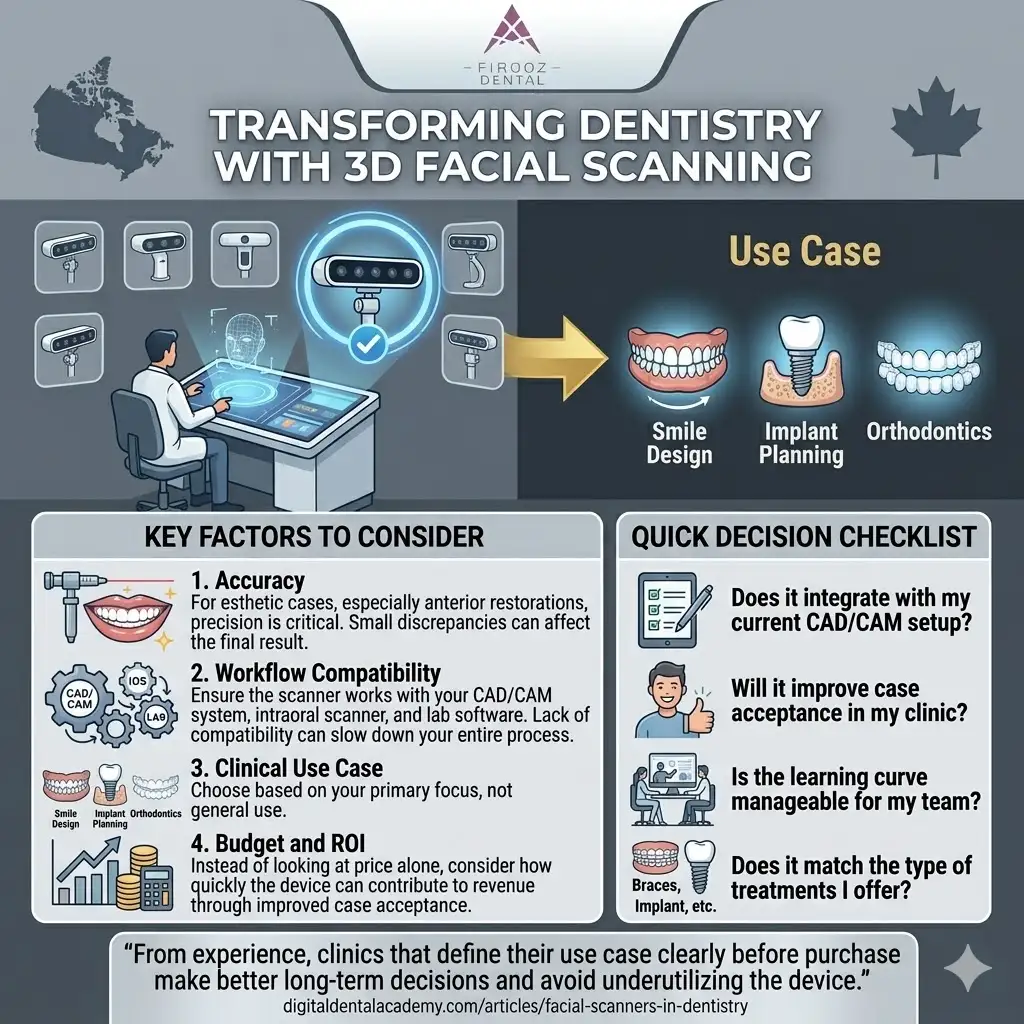
A dental face scanner should be evaluated as part of your clinic’s digital workflow, not as a standalone device. Start with the cases you plan to support, then compare model-specific capture performance, software and data compatibility, team usability, training, support, and total cost.
For Canadian clinics, pricing, availability, included software, and service scope can vary by model and configuration. Build a shortlist using the criteria below, then confirm final specifications and compatibility against current manufacturer documentation before ordering.
Key Criteria to Compare Before Buying
Use these criteria to narrow the category. Detailed workflows, technology explanations, and model-specific specifications belong in their dedicated guides and product pages.
Clinical Workflow
Define the cases in which facial data will be used, such as esthetic planning, smile-design workflows, orthodontic records, implant-related planning, or case communication. The best fit depends on the work your clinic actually performs.
Verified Capture Performance
Do not rely on generic labels such as “high accuracy.” Review the manufacturer’s current specifications, measurement method, repeatability information, and any workflow limitations relevant to your intended use.
Software & Data Compatibility
Confirm supported output formats, software versions, alignment options, and whether the facial data can be used with the intraoral scanning, CAD, or laboratory workflow already in place.
Team Usability & Training
Consider patient positioning, capture steps, software complexity, onboarding requirements, and how easily the scanner can become part of a repeatable daily workflow.
Total Cost
Compare more than the device price. Software licensing, workstation requirements, accessories, training, updates, service, and ongoing support can all affect the total cost of ownership.
Demo, Service & Support
Before the final decision, confirm what is included with the system, current warranty and service terms, available training, technical-support scope, and whether a product demonstration is available.
Compare Face Scanners by Verified Buying Criteria
A useful comparison should be based on current, source-backed model data. Avoid ranking scanners with unsupported “high / medium / low” labels when the test method, software version, or configuration is not defined.
| Criteria | What to Verify | Why It Matters |
|---|---|---|
| Capture performance | Manufacturer specifications, measurement method, repeatability, and relevant limitations | Performance should be interpreted in the context of the intended workflow, not as a standalone marketing claim. |
| Data & outputs | Supported file types, export options, and current software capabilities | Determines how easily facial data can move into the next stage of the digital workflow. |
| Workflow integration | Compatibility with intraoral scans, CAD software, laboratory handoff, and required software versions | Reduces the risk of buying a scanner that does not fit the clinic’s existing digital ecosystem. |
| Usability | Capture steps, positioning, training needs, and software learning curve | A system only creates value when the team can use it consistently and correctly. |
| Commercial terms | Current price or quote, availability, included items, software licensing, warranty, and service scope | Allows a realistic comparison of total cost rather than hardware price alone. |
What Is a Dental Face Scanner?
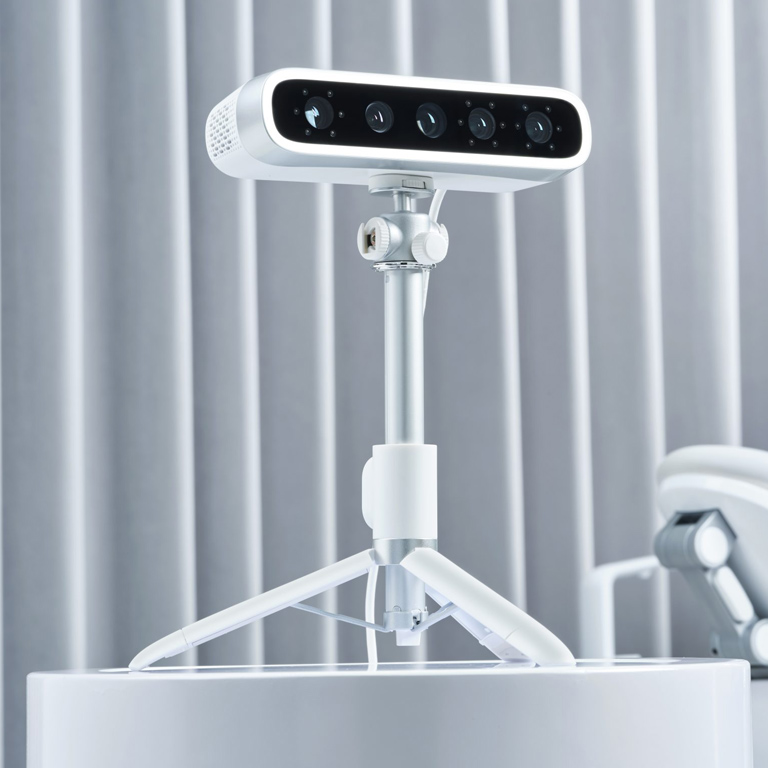
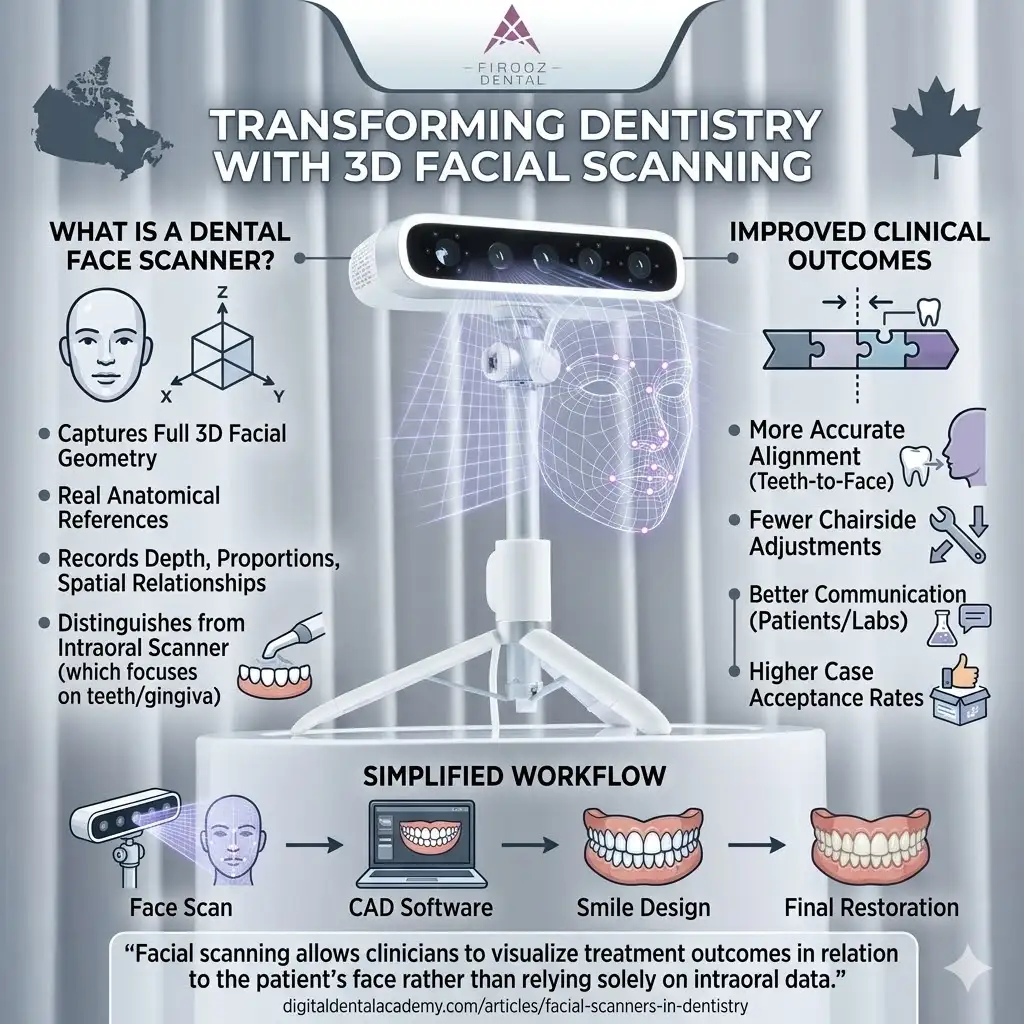
A dental face scanner is used to capture three-dimensional facial data for digital planning, documentation, and communication workflows. It provides external facial context that can complement intraoral and other digital records when the software and workflow support that integration.
This category page only summarizes the technology so you can make a purchasing decision. Capture methods, outputs, accuracy concepts, integrations, and limitations should be covered in the dedicated face-scanner guide.
Common Workflows to Consider
Use cases help define what to look for in a scanner. Detailed clinical workflows and integration steps should be handled in dedicated guides rather than expanded into a full tutorial on this category page.
Smile Design & Esthetic Planning
Facial data can provide an external reference for digital esthetic workflows. Confirm that the scanner and software support the planning process used by your clinic.
Implant-Related Digital Workflows
Some workflows combine facial data with intraoral or other digital records. Verify registration methods, compatible formats, software requirements, and the intended role of each dataset.
Orthodontic Records
Facial scanning may be used as part of digital documentation or visualization workflows. Confirm the system’s supported use, capture process, and software capabilities before relying on it for a specific application.
Case Communication
Three-dimensional facial records can provide additional visual context during case discussions. The value depends on how the data is presented and integrated into the clinic’s existing consultation workflow.
Dental Face Scanner Pricing and Total Cost in Canada
Dental face scanner pricing in Canada can vary by model, configuration, included software, accessories, training, support, and current availability. Compare quotes based on what is actually included rather than hardware price alone.
Before purchase, confirm any software licensing or subscription fees, computer requirements, onboarding and training, warranty or service terms, future update costs, and the support available for your location and workflow.
| Cost Component | What to Confirm Before Purchase |
|---|---|
| Scanner hardware | Current Canadian quote, configuration, included accessories, and availability |
| Software | Included modules, licence model, subscription or renewal terms, and supported versions |
| Computer / network | Required workstation specifications, ports, connectivity, and storage requirements |
| Training & onboarding | What training is included, who receives it, and whether additional sessions are available |
| Warranty & support | Warranty terms, technical-support scope, service process, and any ongoing service costs |
Dental Face Scanner FAQs
Use these questions to confirm fit, compatibility, cost, and support before selecting a model.
What should I compare before buying a dental face scanner?
Start with your intended clinical workflow, then compare verified model specifications, supported outputs, software compatibility, training requirements, total cost, warranty, service, and current availability.
Can a face scanner work with my intraoral scanner and CAD software?
Compatibility is model-, software-, and version-specific. Confirm supported file formats, alignment workflow, software versions, and any required connectors using current manufacturer documentation before purchase.
How much does a dental face scanner cost in Canada?
Current pricing depends on the model, configuration, software, included accessories, training, support, and availability. Use a current Canadian quote and compare what is included rather than relying on a static price range.
What should I confirm about accuracy before buying?
Review the manufacturer’s current performance specifications, how the measurement was obtained, repeatability information, and any limitations relevant to your intended workflow. Avoid comparing models using unsupported “high” or “low” accuracy labels.
Do I need specific computer hardware or software?
Requirements vary by model and software version. Confirm workstation specifications, operating-system support, ports or connectivity, required applications, storage needs, and licensing before ordering.
What setup, training, and after-sales support should I confirm?
Confirm what is included with installation or onboarding, the available training, warranty and service process, technical-support scope, response path, and any location-specific limitations before purchase.
Continue Your Face Scanner Research
Use the dedicated product, brand, comparison, and educational owners for deeper information instead of expanding this category into a long technical guide.
MetiSmile Face 3D Scanner
Review model-specific specifications, workflow details, software and output information, pricing or quote options, and support.
SHINING 3D Products & Support
Explore the brand portfolio and the relationship between SHINING 3D products, workflows, training, and support.